My Child is Shy at School But Not at Home
It's confusing and often worrying to see your child transform from a chatterbox at home to quiet at school. Discover why this happens and practical ways to support them.
That feeling of seeing your child shrink at school, yet light up at home, can be truly heartbreaking.
By FableJar Team ·

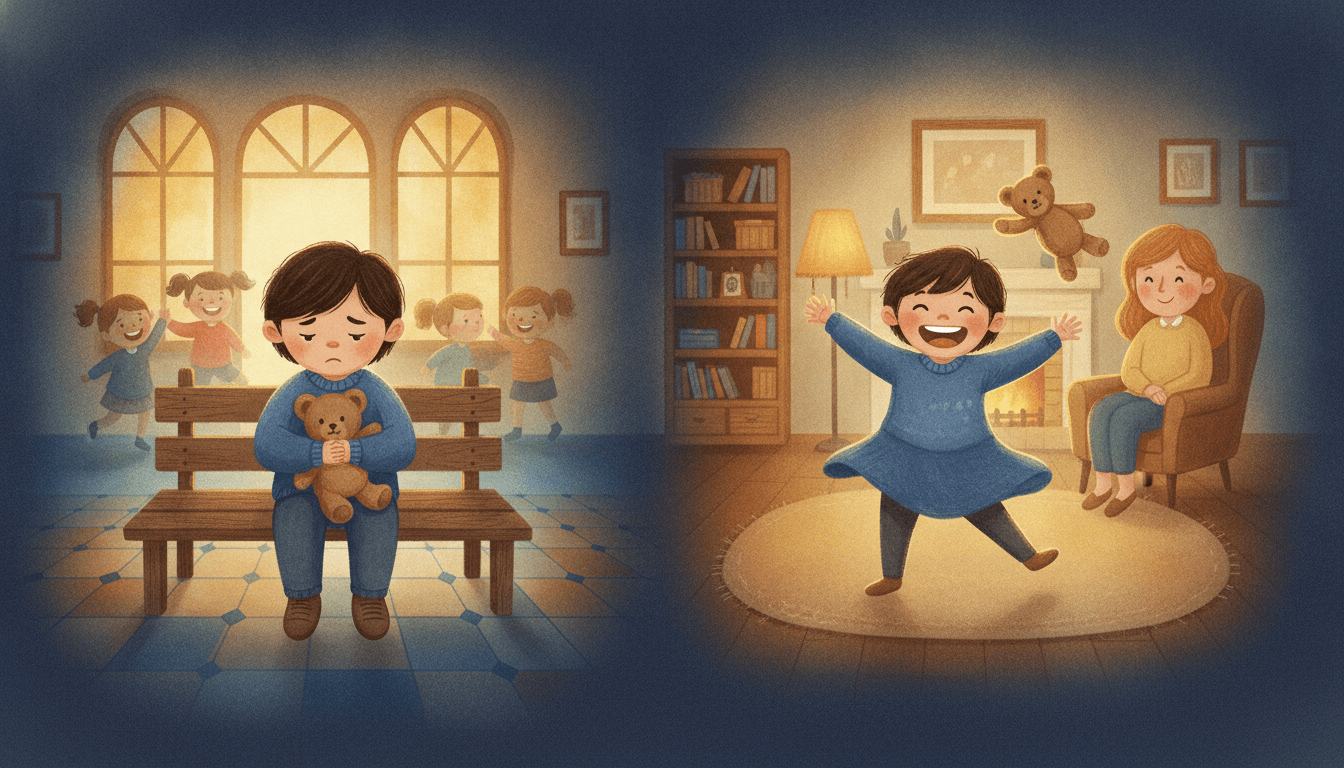
Your child is a whirlwind of laughter and stories at home, confidently commanding the living room stage. They chat non-stop, ask a million questions, and easily express every thought and feeling. Yet, when the school bell rings, a different child emerges: quiet, reserved, almost invisible.
This stark contrast can be incredibly confusing and even heartbreaking for parents. You might wonder if something is wrong, if they're unhappy, or if you're missing a vital clue. Rest assured, you're not alone in feeling this way.
Many parents of children aged 3-10 face this exact perplexing challenge. It’s a common scenario that speaks volumes about your child's internal world and how they navigate different environments. We’re here to help you understand why this happens and what practical steps you can take.
It's bewildering to see your child's personality shift so dramatically, leaving you wondering how to bridge the gap between their home comfort and school shyness.
Why This Happens: Understanding Your Child
The difference your child exhibits isn't a sign of manipulation or a character flaw. Instead, it's often a sophisticated coping mechanism. Home is a secure, predictable sanctuary where they feel completely safe to be themselves.
At home, they know the rules, the people, and the expectations. This deep sense of security allows their true personality to shine. There's no pressure to perform or conform, only unconditional acceptance.
School, however, is a vastly different landscape. It's a structured environment with new social dynamics, different authority figures, and a constant stream of sensory input. For a young child, this can be incredibly overwhelming.
Children often have finite amounts of social energy, especially those with introverted tendencies. They might expend a lot of effort processing information and observing others, leaving less energy for active participation.
This "social battery" can drain quickly in a busy classroom. What looks like shyness might actually be a child processing, adapting, or simply recharging in a demanding environment. It’s their way of managing overwhelming stimuli.
What Your Child Is Feeling
Behind the quiet demeanor at school, your child might be experiencing a range of intense emotions. Anxiety about saying the wrong thing, fear of judgment, or simply feeling overwhelmed by the noise and activity are common.
They might desperately want to join in or make friends but feel paralyzed by uncertainty. The desire to connect is there, but the "how" feels too big or too risky. This can lead to deep frustration and even loneliness.
Sometimes, children feel a profound sense of exhaustion from constantly monitoring their environment and trying to fit in. They might be "masking" their true selves all day, which is mentally and emotionally draining.
They may feel misunderstood by teachers or peers who perceive their quietness as disinterest or unfriendliness. This can further isolate them, reinforcing their shy tendencies in that setting.
Shyness isn't a flaw; it's often a coping mechanism or a sign of deep processing. Our role is to understand their world and equip them with tools to navigate it.
What You Can Do: Practical Steps
Supporting a shy child requires patience, empathy, and a consistent approach. It’s about building their inner resilience and providing them with safe opportunities to practice social skills. Here are some actionable strategies you can implement at home and in collaboration with their school.
Observe and Listen Without Pressure
Pay close attention to situations where your child seems most comfortable or uncomfortable at school, if possible. At home, create space for them to talk about their day without interrogation. Ask open-ended questions like, 'What was one interesting thing that happened today?' or 'What was something that made you think?'.
Prepare for Social Transitions
Help your child mentally prepare for new or challenging social situations. Role-play scenarios like asking to join a game, introducing themselves, or asking a teacher for help. Practice simple scripts at home to build confidence for real-life interactions.
Teach Specific Social Skills
Break down social interactions into smaller, manageable steps. Practice making eye contact, smiling, using a clear voice, or taking turns in conversation. Use playdates with one trusted friend as a safe space to practice these skills before larger group settings.
Build Confidence Through Mastery
Encourage activities where your child can develop skills and feel competent, whether it's building with LEGOs, drawing, or mastering a small chore. Celebrate their effort and achievements, no matter how small. This builds a foundational belief in their own abilities that can transfer to social settings.
Partner with the School
Share your observations with your child's teacher. Explain that your child is very outgoing at home. Ask about specific situations where shyness is apparent and brainstorm strategies together, such as assigning a 'buddy' or giving your child small responsibilities that encourage interaction.
Validate Their Feelings
Acknowledge and normalize their shyness. Say things like, 'It's okay to feel a little shy sometimes, many people do.' Avoid labeling them as 'the shy one' as this can become a self-fulfilling prophecy. Instead, focus on their bravery when they do step outside their comfort zone.
Focus on Strengths and Interests
Help your child identify their unique talents and interests. When they feel good about what they can do, they are more likely to share those passions with others. This can be a natural bridge to making connections with peers who share similar interests.
How Bedtime Stories Can Help
Bedtime stories offer a uniquely powerful and safe space for children to explore complex emotions and social challenges. Within the comfort of their own bed, they can safely journey alongside characters who face similar struggles, like feeling shy or finding their voice.
Through these narratives, children can vicariously experience overcoming obstacles without the pressure of real-world consequences. It allows them to process feelings, understand different perspectives, and mentally rehearse new social behaviors.
When a story features a protagonist who starts shy but gradually learns to connect, it provides a relatable blueprint for your child. They see that it's possible to navigate these feelings and emerge more confident, often inspiring them to try new approaches themselves.
This gentle, indirect approach can be far more effective than direct questioning or advice. Stories speak to a child's imagination and heart, fostering empathy and building resilience from the inside out.
Leo the Listener Finds His Roar
Leo the lion cub loved to listen. He listened to the rustle of leaves, the chirping of crickets, and the booming laughs of his classmates at Sunny Savannah School. But when it was time to share his own ideas, Leo's roar felt like a tiny squeak, stuck deep inside his chest. He longed to tell everyone about the rainbow beetle he'd found, but the words just wouldn't come out.
One morning, Ms. Giraffe announced a 'Show and Tell' about favorite bugs. Leo's tummy did a flip-flop. He practiced his beetle story in front of his reflection all night. The next day, when it was his turn, his paws trembled. But then, he remembered how brave the little beetle was, scurrying across the leaf. Taking a deep breath, Leo started, 'My rainbow beetle...' and to his surprise, the words came, clear and strong, just like a true lion's roar.
Create Your Child's Story FreeMoving Forward
Witnessing your child's journey from a vibrant home personality to a quiet school presence can be tough, but remember it’s a phase of growth and learning. With your understanding, patience, and the right tools, your child can absolutely bridge this gap.
Celebrate every small step they take, every brave hello, and every moment they choose to share. Your consistent love and support are the most powerful forces in helping them feel secure enough to let their true self shine, no matter where they are.
Help Your Child Through Stories
Every night, FableJar creates a personalised bedtime story where your child is the hero — helping them work through the exact challenge you're facing.
Create a Free StoryNo credit card required. First story is free.
Get weekly story ideas for your child
One email a week. Real parenting challenges. Story-based solutions. No spam.
Join 5,000+ parents. Unsubscribe anytime.
Keep reading
A Simple Way to Build Confidence in Kids Every Night
Confidence isn't built in big moments. It's built in small ones — like hearing yourself succeed in a story.
How to Talk to Kids About Bullying (That Actually Works)
Most anti-bullying talks go over kids' heads. Stories that model real responses give them tools they can use.
What to Do When Your Child Is Afraid of the Dark
Telling them 'there's nothing there' doesn't work. Here's what does — and how a story can reframe the dark.