How to Talk to Kids About Bullying (That Actually Works)
Most anti-bullying talks fail because they’re abstract. Children don’t need a speech about kindness. They need scripts, rehearsal, and the confidence that comes from having practiced standing up — even if only in a story.
“Your child doesn’t need to be told bullying is wrong. They need to know what to do when it happens to them.”
By the Fable Jar Team ·
&media=https%3A%2F%2Ffablejar.com%2Fimages%2Fblog%2Ftalk-about-bullying.webp)
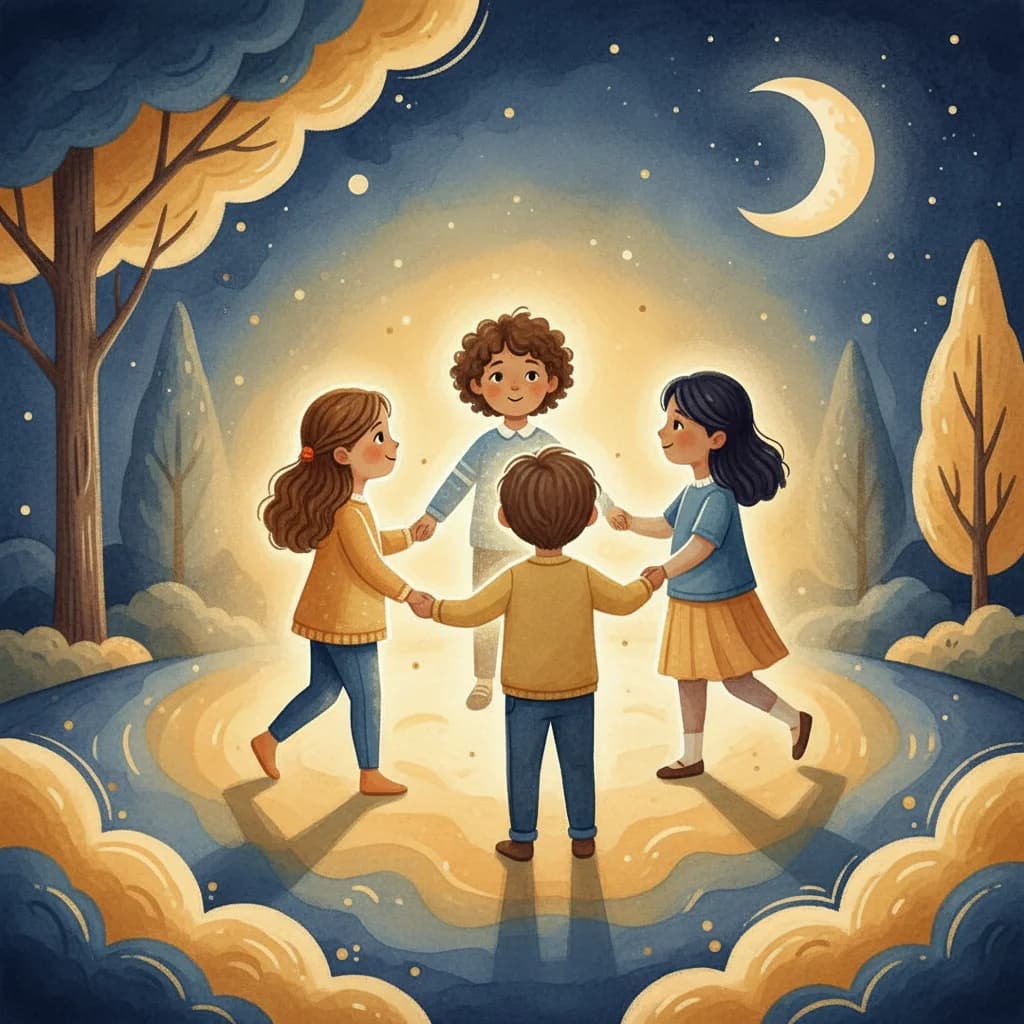
Your child comes home from school and they’re quiet. Not the good quiet — the kind where they’re processing the day. The heavy quiet. The kind where they put their bag down slowly, avoid your eyes, and say “fine” when you ask how school was. You know something happened. And after twenty minutes of gentle circling, it comes out: someone said something. Someone did something. Someone made them feel small.
Every instinct in your body fires at once. You want to fix it. You want to protect them. You want to march into that school and make sure it never happens again. But you know you can’t fight every battle for them. So you sit with your child, and you try to give them the tools to handle it themselves.
And what comes out sounds something like: “Just ignore them.” Or: “Tell a teacher.” Or: “Stand up for yourself.” You mean well. You mean every word. But your child’s face tells you what you already suspect: those words aren’t enough.
“Just stand up for yourself” is like saying “just play the piano.” It describes the goal without giving any of the skills needed to get there.
Why most anti-bullying talks go over kids’ heads
The typical anti-bullying conversation, whether it happens at home or school, relies on abstractions. Be kind. Treat others how you want to be treated. Bullying is wrong. These are true statements. They’re also completely useless to a six-year-old who’s standing in a playground while someone calls them a name.
Here’s why. Children under eight or nine don’t think in abstractions. Their prefrontal cortex — the part of the brain that handles abstract reasoning, future planning, and impulse control — is still under construction. When you say “stand up for yourself,” an adult hears a philosophy. A child hears a vague instruction with no specifics. Stand up how? Say what? Do what with my hands? What if they laugh? What if it makes things worse?
The gap between knowing bullying is wrong and knowing what to do about it is enormous. And it’s in that gap where children freeze, comply, or internalize the message that they’re powerless. What they need isn’t a philosophy. It’s a script.
Children need scripts, not speeches
Think about how adults prepare for difficult conversations. A tough meeting at work. A confrontation with a neighbour. A breakup. We rehearse. We practice the words in the shower, in the car, in our heads. We run through scenarios: If they say this, I’ll say that. This mental rehearsal is what gives us the confidence to actually show up and speak.
Children need the same preparation, but they can’t do it themselves. Their brains don’t spontaneously generate rehearsal scenarios. They need someone to provide them — and the most natural, powerful way to provide a rehearsal scenario to a child is through a story.
Research from the University of Cambridge’s Faculty of Education has shown that children who engage in narrative role-play — hearing stories where characters face social conflicts and then discussing or re-enacting them — develop significantly stronger conflict-resolution skills than children who receive direct instruction. The story gives them a mental model: a vivid, emotionally-charged example of what standing up looks like, sounds like, and feels like.
Once that model exists in their brain, they can draw on it. Not as a memorized script — but as an emotional memory of having already navigated this situation. The same way an athlete visualizes a race before running it, a child who’s heard themselves navigate a bullying situation in a story has already practiced it.
A child who’s heard a story where they stood up to a bully has already done it once. That first time — even in fiction — is everything.
The difference between “stand up for yourself” and being equipped to
Let’s be honest about what “stand up for yourself” really means to a child. It means: do something you’ve never done, in a situation that terrifies you, with skills no one has taught you, and do it in front of people who might laugh. It’s an unreasonable request disguised as encouragement.
What children actually need is much more specific. They need to know what assertiveness sounds like — the actual words. They need to understand the difference between aggression (“Leave me alone or else”), passivity (saying nothing), and assertiveness (“I don’t like that. Please stop.”). They need to know that their voice might shake, and that’s okay. They need to know that standing up doesn’t always fix the problem instantly — but it changes how they feel about themselves.
Most critically, they need to have felt what assertiveness feels like before they’re asked to perform it. And stories provide exactly that. When a child hears a character — a character with their name, facing their situation — say “Stop. I don’t like that” with a steady voice, the child’s brain rehearses saying it too. The neural pathways fire. The emotional memory forms. And next time, the words come a little easier.
What assertiveness actually looks like for a child
The Words
“I don’t like it when you say that.” “Stop, that’s not okay.” “I’m going to walk away now.” Simple, clear, first-person statements that name the behavior and set a boundary.
The Body
Shoulders back. Eye contact (or near it). Feet planted. Children communicate confidence through posture before they feel it internally. The body teaches the brain.
The Follow-Through
Walking away. Finding a trusted adult. Choosing to sit with someone else. Assertiveness isn’t just the moment of confrontation — it’s everything that comes after.
6 things parents can do when bullying comes home
Listen first, fix later
When your child tells you about bullying, resist the urge to immediately problem-solve. First, just listen. Reflect what they’re feeling: “That sounds really hard. I’m glad you told me.” A child who feels heard is far more likely to accept guidance than one who feels rushed toward a solution.
Give them actual words
Role-play specific responses together. “If Maya says that again, you could say: ‘I don’t like that. Please stop.’ Want to practice it?” Make the rehearsal low-pressure and even playful. The goal isn’t perfection — it’s familiarity.
Separate assertiveness from aggression
Many children (and adults) confuse standing up for themselves with being mean back. Teach the distinction clearly: “Standing up for yourself isn’t about being louder. It’s about being clear. You’re not attacking them. You’re protecting yourself.”
Acknowledge that it’s scary
Don’t pretend standing up is easy. Say: “I know it feels really scary to say something. That’s normal. Being brave doesn’t mean not being scared. It means doing the brave thing even when you are.” This validation is essential. Dismiss the fear, and you lose them.
Involve the school, but empower the child too
Report persistent bullying to the school. But also help your child develop their own sense of agency. Children who feel like the adults handled everything for them often feel more helpless, not less. Help them be part of the solution.
Read them a story where they navigate it
A bedtime story where a character — one with your child’s name — faces a similar situation and finds their voice is one of the most powerful tools you have. It’s not a lecture. It’s a rehearsal. And the next day, when the situation comes up again, your child has a memory of having already navigated it.
How stories rehearse real social courage
Everything above is something you can start tonight. Talk with your child. Give them words. Practice together. But if you want to go deeper — if you want a story built specifically around your child’s social situation, using their name and their world, designed to let them practice standing up in a safe, imaginative space — that’s what Fable Jar creates.
You tell us what happened. We create a story where your child faces a parallel challenge and discovers their own voice — not through force, but through clarity, courage, and the quiet power of knowing who they are. Every night, a different version of the same truth: you are allowed to take up space. Your voice matters. And you are braver than you think.
Ella and the Echo Cave
In the Whispering Valley, there was a cave that repeated everything you said — but louder. Most animals avoided it. But Ella had been walking past the cave every day, and every day, a large crow named Caw would sit at the entrance and say something unkind. “You’re too small to be in this valley,” Caw would sneer. “You don’t belong here.”
Ella would say nothing. She’d look at her feet and hurry past. The words would sit inside her like stones, heavy and cold. Each day, she felt a little smaller.
But one afternoon, the old tortoise by the river said something that stuck. “The Echo Cave doesn’t just repeat words, Ella. It amplifies truth. And the truest voice always echoes the longest.”
The next morning, when Caw opened his beak, Ella stopped walking. Her heart was pounding. Her voice shook. But she looked Caw in the eye and said, clearly: “I do belong here. And I’d like you to stop.” The Echo Cave caught her words and sent them bouncing through the valley — louder, clearer, truer than anything Caw had ever said. Caw blinked. Ruffled his feathers. And, for the first time, said nothing at all.
Create a story like this for your child →Give your child the words before they need them
Tell us their name, age, and the social challenge they’re facing. Fable Jar creates a story where they find their voice.
Create a Story for Your ChildTakes less than 60 seconds. First story is free.
Tomorrow, your child might face that situation again. The comment in the lunch line. The exclusion at recess. The name that someone calls them when no teacher is watching. You can’t be there. But a story can. A story where they stood up, they found the words, they discovered their own voice echoed louder than the cruelty. That story lives in their brain now. And it will be there when they need it.
What parents are telling us
“My daughter was being excluded by a group of girls at school. She’d come home in tears every day. After a week of Fable Jar stories about finding her voice, she told the girls: “I don’t like being left out. I’d like to play too.” She said it just like the character in her story. It didn’t fix everything — but it changed how she felt about herself.”
“My son was being teased about his glasses. He never wanted to tell anyone. After his Fable Jar story, he told me: “The tortoise said the truest voice echoes longest. I think mine is pretty true.” I didn’t even know he was paying that much attention.”
Get weekly tips on raising socially confident kids
One email a week. Practical strategies for friendships, bullying, and social courage. No spam.
Join 5,000+ parents. Unsubscribe anytime.
Keep reading
How to Help Your Child Make Friends (Without Forcing Them)
A gentler approach — and how a single bedtime story can open doors words alone can’t.
A Simple Way to Build Confidence in Kids Every Night
Confidence is built in small, repeated moments — like hearing yourself succeed in a story, night after night.
Why Kids Relate Better to Stories Than Advice
It’s not that kids don’t listen — it’s that their brains process narrative differently than instruction.