What to Do When Your Child Is Afraid of the Dark
Telling them “there’s nothing there” doesn’t work — because to them, there is. Here’s what actually helps.
“The dark isn’t the problem. It’s what their imagination puts in it.”
By the Fable Jar Team ·

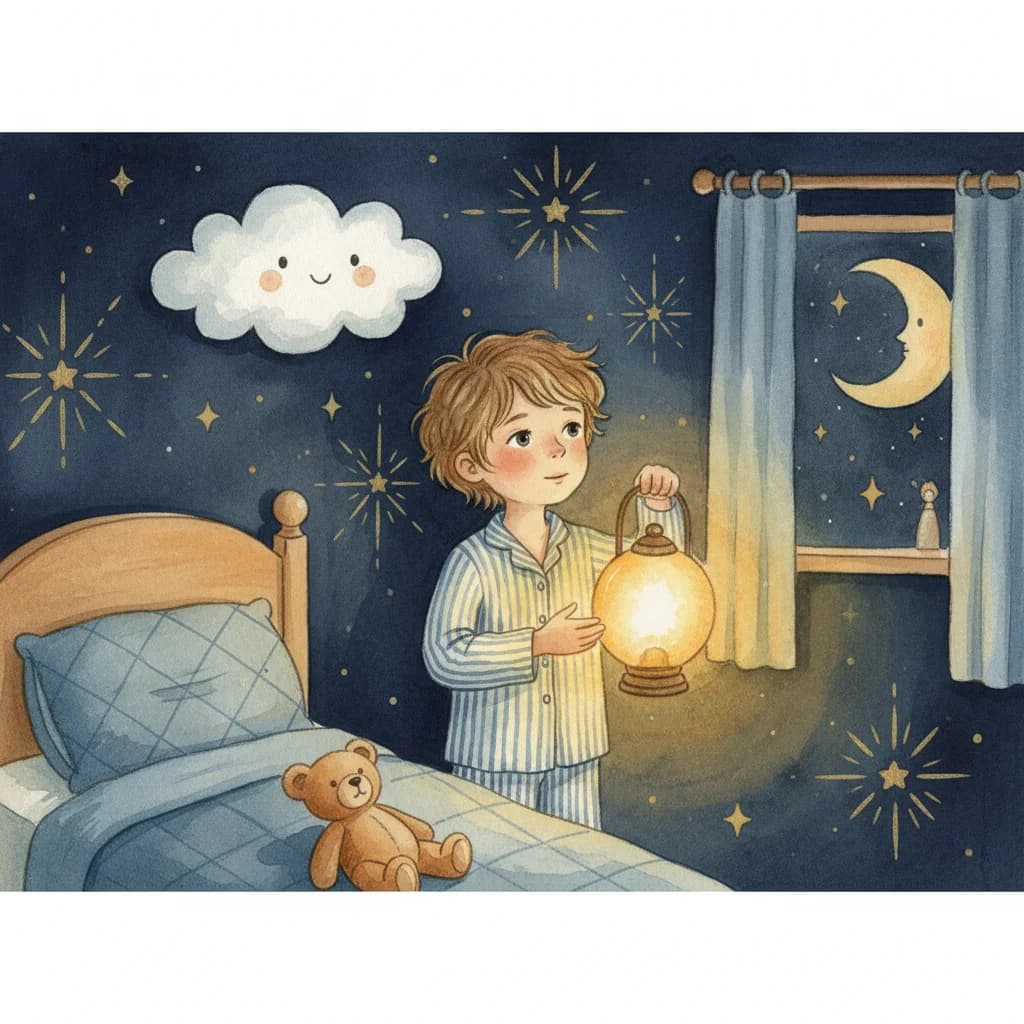
It’s 9:14pm. You’ve done the bath, the teeth, the pajamas, the story, the glass of water, the second glass of water. You’re halfway down the hall when you hear it — that small, trembling voice: “Mummy? Daddy? I’m scared.”
You go back. You sit on the bed. You look around the room and see exactly what you expected to see: nothing. A wardrobe. A curtain moving in the breeze. A pile of stuffed animals. “There’s nothing there, sweetheart,” you say. “You’re safe.”
And you mean it. You mean every word. But your child’s eyes are still wide, and their little fist is still gripping the duvet, and you can tell — your reassurance didn’t land.
This isn’t a failure of parenting. It’s a mismatch of tools. Because the fear of the dark isn’t a logical problem — and logical solutions won’t solve it.
When you say “there’s nothing there,” your child hears “you shouldn’t feel what you’re feeling.” And that makes the fear worse, not better.
Why fear of the dark is completely normal
If your child is between the ages of two and ten, fear of the dark is not only normal — it’s almost universal. Studies suggest that up to 73% of children in this age range experience it at some point. It typically peaks between ages three and six, then gradually fades as the brain matures.
The reason is developmental, not dysfunctional. At around age two or three, a child’s imagination explodes. They can suddenly create vivid mental images, populate worlds with characters, and imagine things that aren’t there. This is a wonderful development — it’s the birth of creativity, empathy, and complex thought. But it has a side effect.
An imagination powerful enough to create a magical kingdom is also powerful enough to create a monster under the bed. The same mental machinery that lets your child play pretend all afternoon fills the dark corners of their room with everything they can’t see but can’t stop imagining. The dark isn’t the enemy. It’s the canvas.
Why “there’s nothing there” backfires
When we say “there’s nothing to be afraid of,” we’re trying to use logic to resolve an emotional experience. But a child’s fear of the dark doesn’t live in the logical part of their brain. It lives in the amygdala — the brain’s alarm system — which doesn’t respond to reason. It responds to safety cues, emotional regulation, and — critically — new associations.
Worse, dismissal sends an unintended message: Your feelings are wrong. You shouldn’t feel this way. A child who hears this enough times doesn’t stop being afraid. They stop telling you they’re afraid. The fear goes underground, where it grows roots instead of wings.
What children actually need in that moment is twofold. First, validation: “I understand you’re scared. That’s okay.” Second, reframing: a new way to think about the dark that replaces the scary association with a safe or even magical one.
You can’t logic away a child’s fear. But you can give their imagination something better to do with the dark.
What actually works: validation + reframing
The most effective approach to childhood fear of the dark combines two things: acknowledging the feeling as real and important, and gently offering a new narrative to replace the frightening one.
Validation sounds like: “I can see you’re scared, and that’s okay. Being scared in the dark is something that happens to lots of people, even grown-ups. Your brain is just trying to protect you.”
Reframing sounds like: “What if the dark isn’t empty? What if it’s actually full of stars you can only see with your eyes closed? What if the shadows are actually friendly creatures who keep watch while you sleep?”
This isn’t about lying to your child. It’s about giving their imagination a new job. Right now, their imagination is filling the dark with threats. You’re redirecting it to fill the dark with wonder instead. And the most powerful way to do that is through a story.
5 things to try tonight
Validate first, always
Before offering solutions, simply name what they’re feeling. “You’re feeling scared. That makes sense. I’m here.” This alone can lower the amygdala’s alarm response by up to 50%.
Give the dark a friendly character
Introduce the idea that the dark has a guardian — a gentle creature whose job is to keep the room safe. Name it together. Give it a personality. Once the dark has a friendly resident, it stops being empty and threatening.
Create a “brave light” ritual
Give your child a small nightlight, a glow-in-the-dark star, or even a “magic” object (a stone, a feather) that “keeps the brave inside them.” The object itself isn’t magic — but the ritual of holding it gives them a sense of control, which is what fear takes away.
Avoid reinforcing the fear accidentally
Monster checks under the bed and in the wardrobe are well-intentioned — but they confirm that there’s something worth checking for. Instead of looking for what’s not there, focus on what is: “Look, your room is full of your things. Your books, your bear, your blanket. Everything safe.”
Tell a story that transforms the dark
The most powerful reframe is a bedtime story where your child discovers that the dark is beautiful, magical, or protective. When the last thing they hear before sleep is a story where the dark is their friend, that’s the association their brain carries into the night.
Turning the dark from enemy to adventure
All of the tips above will help. But the one that transforms things most — the one parents tell us made the biggest difference — is the story. Because a story doesn’t just tell your child the dark is safe. It lets them experience the dark as safe. It gives them a memory — vivid, emotional, personal — of the dark being a place of wonder.
And when that story features your child by name? When they’re the brave explorer who discovers the dark’s secrets? The fear doesn’t just recede. It gets replaced by something better: curiosity.
Leila and the Nightgarden
Leila pulled the covers up to her nose. The room was dark. The shadows were doing that thing again — growing and stretching and making shapes she didn’t like. She squeezed her eyes shut.
But then she heard something. Not a scary something. A soft, silvery hum, like a lullaby made of moonlight. She opened one eye. Then the other. And there, growing right out of the carpet beside her bed, was a garden — a tiny, glowing garden with flowers made of starlight and paths made of moonbeam.
“This is the Nightgarden,” whispered a small creature with velvet ears and kind eyes. “It only grows in the dark, Leila. And it only shows itself to children who are brave enough to look.”
Leila sat up. She looked around her room — really looked. The shadows weren’t scary anymore. They were the Nightgarden’s canopy, sheltering all the tiny glowing things that only come out when the lights go off.
Create a story like this for your child →What this story does for your child’s brain
Reframes the Dark
The dark is no longer empty and threatening — it’s a place where magical things grow. The brain stores this new association alongside the old one, gradually replacing fear with wonder.
Builds Agency
The child in the story doesn’t have the fear removed for them. They choose to look. They choose to be brave. This gives your real child a model for facing their own fear actively.
Validates the Feeling
The story begins with the child feeling afraid — just like your child does. This normalizes the fear before transforming it. Your child feels seen before they feel brave.
Create a story that transforms bedtime for your child
Enter their name and age. Tell us about their fear. Fable Jar creates a story where the dark becomes an adventure — with them as the hero.
Create a Story for Your ChildTakes less than 60 seconds. First story is free.
Tonight, when the lights go off and your child’s imagination starts filling the dark, imagine them remembering a story where they discovered the Nightgarden. Where they were brave enough to look. Where the dark turned out to be full of starlight, not shadows. That one story could be the night everything changes.
What parents are telling us
“My son has been afraid of the dark since he was two. After his Fable Jar story about the Moonkeeper, he asked me to turn the nightlight OFF. He said he wanted to see if the Moonkeeper would come. I stood in the hallway and cried.”
“We’d tried everything — nightlights, monster spray, checking under the bed. Nothing worked until we gave her a story where the dark was a garden. Now she tells me the shadows are “just the leaves.””
Get weekly tips for calmer, braver bedtimes
One email a week. Real parenting challenges. Story-based solutions. No spam.
Join 5,000+ parents. Unsubscribe anytime.
Keep reading
Why Bedtime Stories Are More Important Than You Think
They’re not just entertainment. They’re quietly shaping your child’s brain, their emotional world, and your bond.
A Simple Way to Build Confidence in Kids Every Night
Confidence is built in small, repeated moments — like hearing yourself succeed in a story, night after night.
How Stories Shape a Child’s Thinking
Children don’t learn values from lectures. They absorb them from characters they love.