How to Help your Child with Fear of Being Alone
Discover empathetic strategies and practical steps to guide your child through their fear of being alone, building their confidence and sense of security.
The silent plea for company when the lights go out is a tough moment for any parent.
By FableJar Team ·

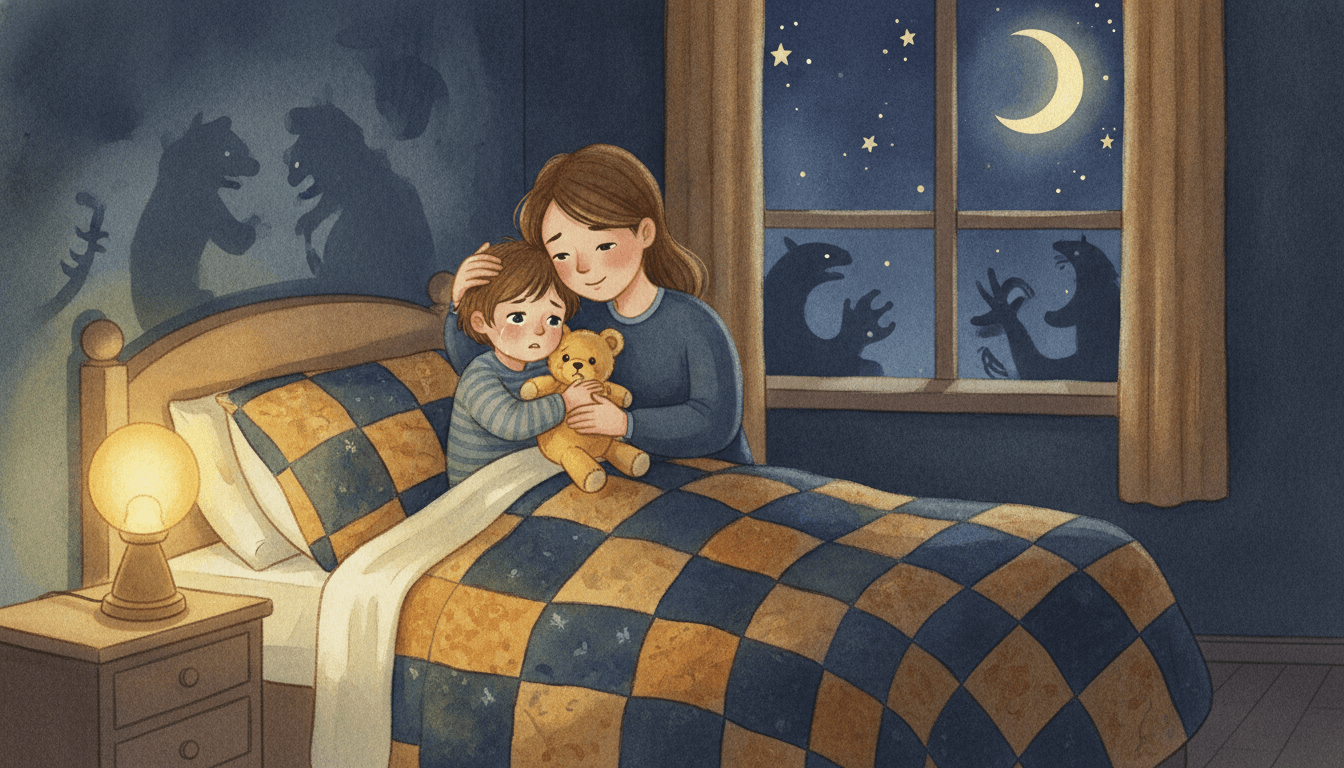
There's a familiar moment many parents experience: you've just tucked your child into bed, said your goodnights, and are quietly slipping out of the room. Suddenly, a small voice calls out, "Don't leave me!" or "Stay with me!"
It's a plea that tugs at your heartstrings, often leading to a cycle of repeated goodbyes and a child who struggles to feel secure on their own. This isn't just a phase; it's a genuine fear that requires understanding and gentle guidance.
That feeling of helplessness when your child is gripped by the fear of being alone is a shared parental challenge.
Why This Happens: Understanding Your Child
A child's fear of being alone, especially at bedtime, is a common and normal part of development. For younger children (3-5), vivid imaginations can conjure up scary scenarios in the quiet darkness.
They might also still be developing a strong sense of object permanence, meaning if you're not in sight, you might feel truly gone.
As children grow (6-10), their fears evolve. They might worry about real-world dangers, or simply feel a profound sense of loneliness in a quiet room. Their developing independence often clashes with a primal need for connection and safety, especially when vulnerable at night.
It's an internal conflict that's hard for them to articulate.
What Your Child Is Feeling
When your child expresses fear of being alone, they aren't trying to manipulate you or delay bedtime. They are genuinely experiencing feelings of vulnerability, anxiety, and sometimes even panic. The quiet of an empty room can amplify these emotions, making them feel exposed and unprotected.
Imagine being in a new, dark place where you can't see what's around you. That's a little like how your child might feel. Their internal alarm system is activated, signaling a need for safety and connection. Validating these feelings is the first crucial step towards helping them overcome them.
Your child's fear of being alone is real, not a tactic. Empathy is your most powerful tool.
What You Can Do: Practical Steps
Navigating your child's fear of being alone requires patience, consistency, and a loving approach. You're not alone in this challenge, and with a few practical strategies, you can empower your child to feel more secure and confident in their own space. Here are some actionable steps you can take.
Validate Their Feelings, Don't Dismiss Them
When your child expresses fear, avoid saying things like 'There's nothing to be scared of.' Instead, acknowledge their feelings: 'I understand you feel scared when I leave the room. It's okay to feel that way.' This builds trust and shows them their emotions are valid.
Create a Gradual 'Alone Time' Routine
Start small. Sit near them while they play independently for a few minutes, then slowly increase the distance or time. At bedtime, stay in the room for a bit, then move just outside the door. Gradually reduce your presence as they grow more comfortable.
Empower with Comfort & Control
Provide a sense of control over their environment. Let them choose a special nightlight, a comforting blanket, or a 'guardian' stuffed animal. A 'monster spray' (water in a spray bottle) can also be a fun, empowering ritual to banish imaginary fears.
Introduce the 'Check-In' Method
Instead of staying until they fall asleep, tell them, 'I'm going to step out, but I'll be back to check on you in 5 minutes.' Set a timer and return promptly. This builds trust, teaching them you always come back, reducing the anxiety of your absence.
Teach Simple Coping Skills
Help your child develop internal tools for self-soothing. Practice deep breathing exercises together: 'Smell the flower, blow out the candle.' Encourage positive self-talk, like repeating 'I am safe' or 'I am brave' when they feel scared.
Build Independence During the Day
Foster a sense of capability during waking hours. Encourage independent play, letting them solve simple problems on their own. The more confident they feel in their abilities during the day, the more secure they'll feel when alone at night.
How Bedtime Stories Can Help
Bedtime stories are more than just entertainment; they are powerful tools for emotional development. They offer a safe, imaginative space where children can explore their fears and anxieties without directly confronting them. Through characters who face similar challenges, your child can find comfort and understanding.
Stories allow children to see coping mechanisms in action, witnessing heroes who find their inner strength or discover friendly helpers. This narrative journey helps them externalize their fears, making them feel less overwhelming.
It also empowers them with new perspectives and strategies they can apply to their own lives, building resilience and confidence.
Leo and the Whispering Willow
Leo snuggled deep under his covers, but the quiet of his room felt too big tonight. Every shadow seemed to stretch, and the space between him and the door felt like a vast ocean. He wished his mom would just stay. Suddenly, a soft, rustling sound came from his window. It wasn't scary, but gentle, like a secret whisper.
It was Willow, the old tree outside his window, swaying gently. "Don't feel so alone, little one," Willow rustled softly in his mind. "The night is full of quiet companions. The stars are watching, the moon is shining, and even the air is a soft hug. You are never truly by yourself, for your brave heart is a bright light, too."
Leo listened. He imagined the stars twinkling just for him, and the moon smiling down. He realized that even when his mom wasn't right next to him, the world was still a friendly place, full of quiet magic. He closed his eyes, feeling a tiny spark of bravery glow inside him, knowing he carried a piece of comfort always.
Create Your Child's Story FreeMoving Forward
Helping your child overcome the fear of being alone is a journey, not a destination. There will be good nights and challenging nights. Remember to celebrate small victories, offer consistent reassurance, and most importantly, be patient with both your child and yourself.
Your loving presence and understanding are the most powerful tools you have to help them build lasting security and confidence.
Help Your Child Through Stories
Every night, FableJar creates a personalised bedtime story where your child is the hero — helping them work through the exact challenge you're facing.
Create a Free StoryNo credit card required. First story is free.
Get weekly story ideas for your child
One email a week. Real parenting challenges. Story-based solutions. No spam.
Join 5,000+ parents. Unsubscribe anytime.
Keep reading
A Simple Way to Build Confidence in Kids Every Night
Confidence isn't built in big moments. It's built in small ones — like hearing yourself succeed in a story.
What to Do When Your Child Is Afraid of the Dark
Telling them 'there's nothing there' doesn't work. Here's what does — and how a story can reframe the dark.
How to Talk to Kids About Bullying (That Actually Works)
Most anti-bullying talks go over kids' heads. Stories that model real responses give them tools they can use.