Help Your Child When They Feel Left Out: A Parent's Guide
Discover empathetic strategies and practical steps to support your child through social challenges and build their confidence.
That pang in your chest when you see your child alone, watching others play, is a universal ache for parents.
By FableJar Team ·

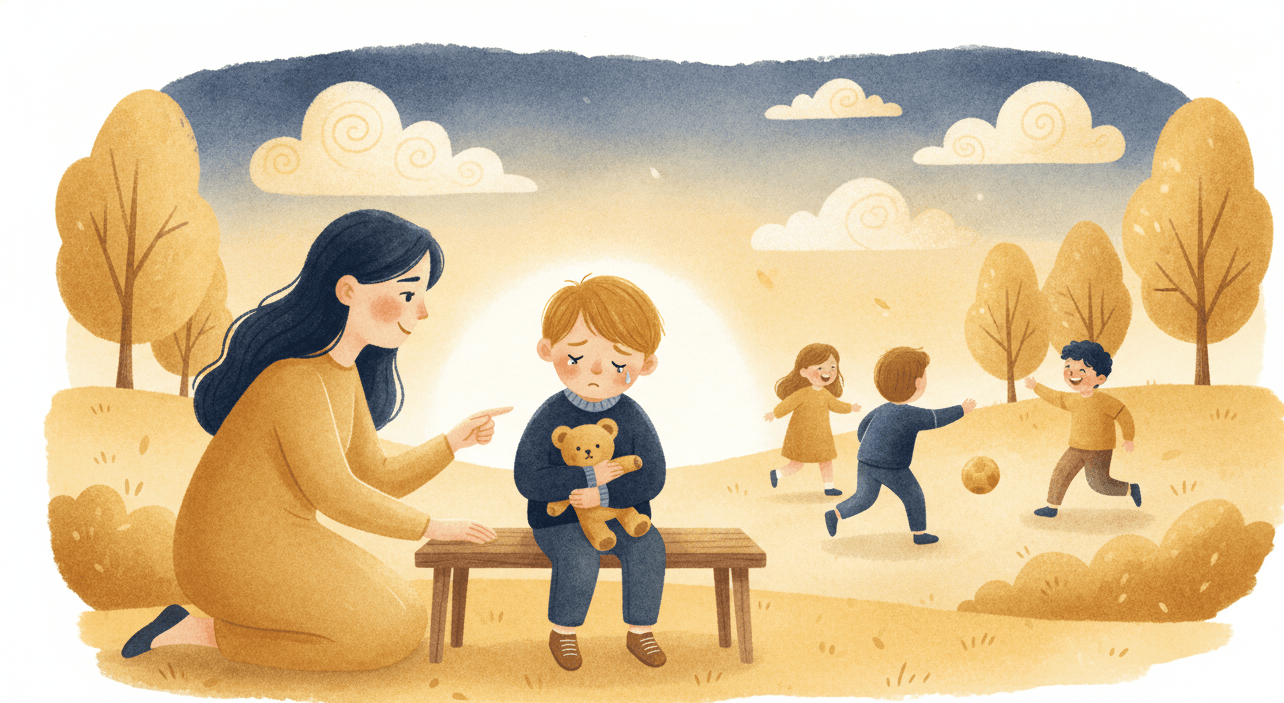
Seeing your child on the sidelines, longing to join in, can be heartbreaking. It’s a moment that stirs deep parental instincts to protect and fix, bringing a wave of concern and helplessness.
You want to scoop them up and make the world fair again, but how do you truly help them navigate these tricky social waters?
It hurts to watch your child feel excluded. You want to make everything better, but knowing what to do can feel overwhelming.
Why This Happens: Understanding Your Child
Children's social worlds are complex and ever-evolving, even at young ages. From the sandbox to the school playground, play dynamics shift rapidly, friendships form and dissolve, and sometimes, exclusion isn't intentional but a natural part of group play.
Kids are still learning social rules, often through trial and error. They might not realize their actions are leaving someone out, or they might simply prefer a specific type of play that doesn't include everyone. Sometimes, it's about shared interests or simply a tight-knit group that's hard to break into.
Between the ages of 3 and 10, children are developing crucial social-emotional skills like empathy, perspective-taking, and cooperation. These skills don't appear overnight; they are practiced and refined through countless interactions, both positive and challenging.
What Your Child Is Feeling
When a child is left out, they often experience a complex mix of emotions. Sadness is common, coupled with confusion about why they aren't included. They might feel angry, frustrated, or even believe there's something inherently wrong with them.
These potent feelings can significantly impact their self-esteem and future willingness to try again. It's a profound lesson in vulnerability, and your empathetic response can shape their resilience and social confidence for years to come. They might internalize the rejection, leading to shyness or withdrawal.
Understanding these feelings is the first step toward helping them. Your child needs to know that their emotions are valid and that you are there to support them, no matter how big or small the social challenge feels.
Being left out isn't a reflection of your child's worth, but a common, albeit painful, part of growing up and learning social navigation.
What You Can Do: Practical Steps
While you can't always control other children's actions, you can absolutely empower your child with effective strategies and unwavering support. Your role is to be their safe harbor, their patient listener, and their wise guide as they learn to navigate the often-choppy social seas.
Listen Actively and Validate Feelings
Sit with your child and truly listen to their experience without immediately offering solutions or minimizing their feelings. Say, 'That sounds really hard,' or 'It's okay to feel sad/angry about that.' Validation is the crucial first step to helping them process and begin to heal.
Avoid Fixing and Encourage Problem-Solving
Resist the urge to immediately call the other parent or intervene directly every time. Instead, ask open-ended questions like, 'What do you think happened?' or 'What could you try next time?' This empowers them to think critically and builds their agency in social situations.
Role-Play Social Scenarios
Practice different ways to join a group or initiate play in a safe, low-pressure environment. Use puppets, stuffed animals, or yourselves to act out situations like, 'Can I play too?' or 'What are you building?' This builds confidence and provides concrete phrases they can use.
Facilitate Small, Supported Playdates
Arrange one-on-one playdates with children who share similar interests or with whom your child has a budding connection. A smaller setting can significantly reduce pressure and allow your child to shine, fostering deeper, more meaningful connections without the complexities of a larger group.
Teach and Model Empathy & Inclusion
Talk about how others might feel when excluded or included. Point out examples of kindness and inclusion in books, TV shows, or real-life interactions. Model inclusive behavior yourself in your interactions with friends, family, and even strangers.
Encourage Diverse Interests and Friendships
Help your child explore various hobbies, clubs, or activities where they can connect with different groups of kids. Being good at something or having varied interests can boost self-esteem and open new social doors beyond their immediate peer group.
Focus on Their Strengths and Uniqueness
Consistently remind your child of all the wonderful qualities that make them special and unique. Reinforce their kindness, creativity, humor, or resilience. Their inherent worth isn't determined by who plays with them on any given day, but by who they are.
How Bedtime Stories Can Help
Bedtime stories offer a uniquely gentle and safe space for children to process complex emotions and explore social challenges. Through the adventures of a story character, your child can see themselves reflected, understand their feelings, and discover new coping mechanisms without direct pressure.
In a narrative, children can try on different social strategies, practice new dialogue, and understand varying perspectives without real-world consequences. This imaginative play builds empathy, resilience, and helps them find their own voice, all while drifting off to sleep with a sense of hope and understanding.
FableJar stories, in particular, can be tailored to feature your child as the hero navigating a similar social situation. This personalization makes the lessons even more powerful and relatable, helping them internalize solutions and build confidence for their own social world.
Leo and the Unfinished Fort
Leo loved building. His newest project was a magnificent fort in the backyard, complete with a secret tunnel! He watched as Maya and Sam played tag nearby, wishing they would join him. He called out, 'Hey! Want to help me with my fort?' But they just giggled and kept running.
A little sigh escaped Leo. He felt a familiar ache in his chest, like a tiny pebble was stuck there. He went back to his fort, but the joy of building had dwindled. Then, he remembered his grandpa's words: 'Sometimes, a new idea can be like a magic key.' Leo looked at his fort, then at Maya and Sam. What if he tried something different?
He decided to make a 'secret message drop-off' for the fort, drawing a fun sign. As he hung it up, Maya and Sam paused their game, curious. 'What's that?' Maya asked. 'It's a secret fort,' Leo explained, 'and I need help figuring out the best secret code for messages. Want to try?' Maya and Sam exchanged a look, then grinned. 'A secret code? Awesome!'
Create Your Child's Story FreeMoving Forward
Helping your child navigate being left out is a journey, not a single event. It requires patience, empathy, and consistent support from you, their most important advocate. Remember, you are equipping them with vital social-emotional skills that will serve them throughout their lives, building their resilience brick by brick.
Keep validating their feelings, celebrating their small victories, and reminding them of their incredible worth. With your love and guidance, they will learn to navigate the complexities of friendship, build confidence, and find their place in the world.
Help Your Child Through Stories
Every night, FableJar creates a personalised bedtime story where your child is the hero — helping them work through the exact challenge you're facing.
Create a Free StoryNo credit card required. First story is free.
Get weekly story ideas for your child
One email a week. Real parenting challenges. Story-based solutions. No spam.
Join 5,000+ parents. Unsubscribe anytime.
Keep reading
A Simple Way to Build Confidence in Kids Every Night
Confidence isn't built in big moments. It's built in small ones — like hearing yourself succeed in a story.
What to Do When Your Child Is Afraid of the Dark
Telling them 'there's nothing there' doesn't work. Here's what does — and how a story can reframe the dark.
How to Talk to Kids About Bullying (That Actually Works)
Most anti-bullying talks go over kids' heads. Stories that model real responses give them tools they can use.