Why Bedtime Stories Are More Important Than You Think
They’re not just entertainment. They’re quietly shaping your child’s brain, their emotional world, and your relationship with them.
“The five minutes before sleep are the five minutes that matter most.”
By the Fable Jar Team ·

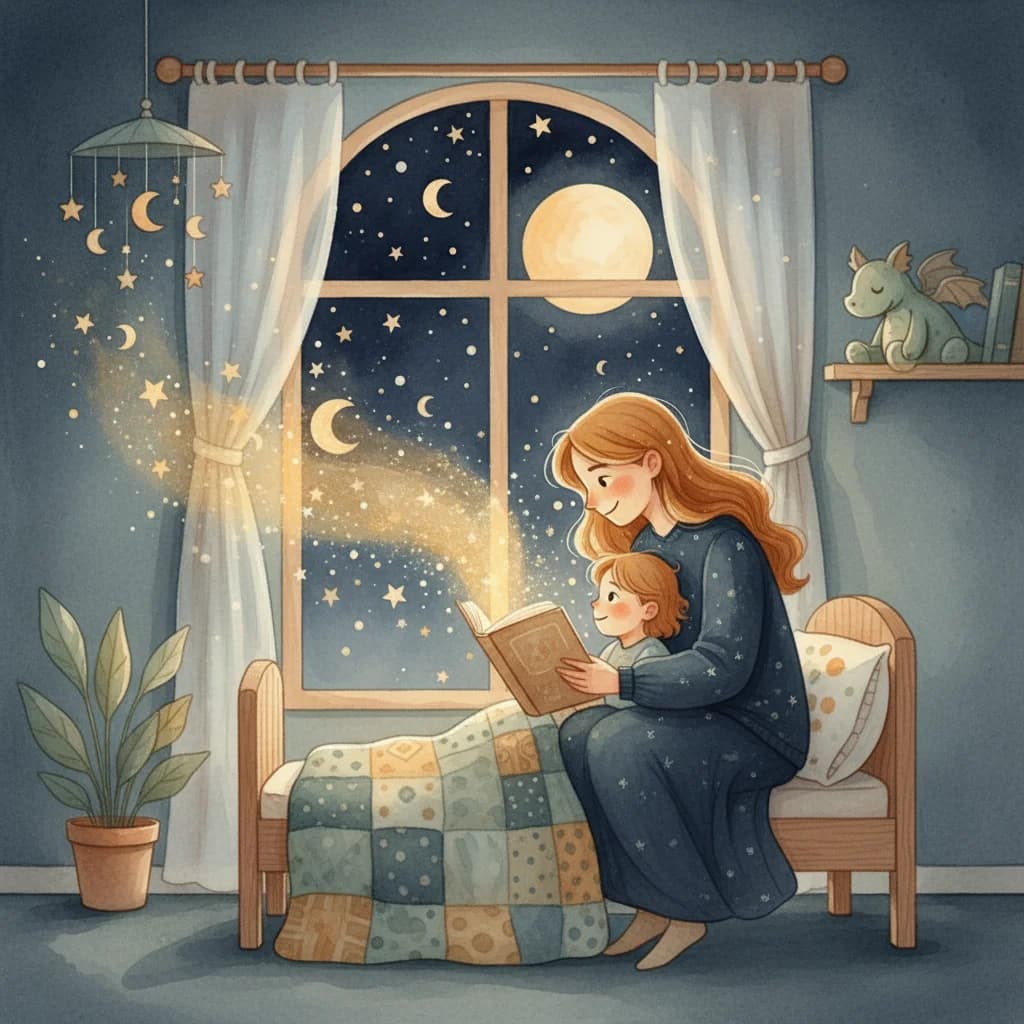
It’s 8:17pm. Your child is finally in bed after the usual negotiation — one more glass of water, one more trip to the bathroom, one more question about whether fish sleep. You’re exhausted. The dishes are still in the sink. Your phone has 14 unread messages. And your child looks up at you and says the thing they say every single night:
“Can you read me a story?”
And in that moment, you have a choice. You can say “not tonight” — and nobody would blame you. Or you can sit on the edge of the bed, open a book, and give them five minutes.
Here’s why those five minutes might be the most important thing you do all day.
Bedtime stories aren’t a luxury. They’re the single most accessible, most consistent, most underrated parenting tool you already have.
What we’re actually losing when we skip story time
Let’s be honest: most of us think of bedtime stories as a nice tradition. Something warm and cozy. Something our parents did. But we underestimate what’s actually happening during those five minutes — and what stops happening when we skip them.
Research from the American Academy of Pediatrics shows that children who are read to regularly have significantly larger vocabularies, stronger pre-reading skills, and better emotional regulation than those who aren’t. A study from the University of Sussex found that just six minutes of reading reduces stress by up to 68% — more than walking, listening to music, or having a cup of tea.
But the benefits go far beyond brain development. When you read to your child at bedtime, you’re doing something no screen, no app, and no playlist can replicate: you’re being fully present, at the exact moment they’re most receptive.
At bedtime, defenses are down. The day’s armour is off. Your child isn’t performing, competing, or reacting. They’re just — there. Lying beside you. Listening. And whatever enters their mind in that state doesn’t just pass through. It stays.
It’s not about the book. It’s about the brain state.
Child psychologists call the period just before sleep the “window of receptivity.” In this state, the brain shifts from active processing to absorptive processing. It stops filtering and starts filing. Whatever a child hears, sees, or feels in this window gets priority storage — woven into their sense of self, their emotional memory, their worldview.
This is why a scary movie before bed causes nightmares, but a warm story before bed causes peace. The content matters enormously — because the brain isn’t just listening. It’s imprinting.
Now imagine what happens when the story your child hears in that window includes their own name. When the hero of the story looks like them, lives in their world, and faces the same challenge they faced at school that day. The brain doesn’t file that as “entertainment.” It files it as experience.
At bedtime, the brain isn’t just listening. It’s imprinting. Whatever enters during those five minutes gets priority storage — woven into your child’s sense of self.
5 ways to make bedtime story time count more
You don’t need special training or expensive books. You just need intention. Here are five simple shifts that turn story time from a routine into the most productive five minutes of your day:
Be consistent, not perfect
It doesn’t have to be every night. But the more consistent you are, the more your child’s brain learns to enter that receptive state at the same time. Three nights a week is better than a guilt-ridden zero.
Choose stories that mirror their day
Had a hard day at school? Pick a story about navigating school. Fought with a sibling? Pick a story about sharing. The closer the story is to their real experience, the deeper it lands.
Put away your phone
This sounds obvious, but it’s the hardest one. Five minutes of undivided attention — no buzzing, no glancing — communicates something no words can: "You are the most important thing in my world right now."
Let them ask questions mid-story
When your child interrupts to ask "Why did the fox do that?" or "Would I be scared too?" — that’s not a disruption. That’s processing. That’s the learning happening in real time. Welcome it.
Make them the hero
The most powerful upgrade to any bedtime story is putting your child inside it. When they hear their own name, their brain shifts from observer to participant. The lesson goes from something they heard to something they lived.
What if tonight’s story was built specifically for your child?
All five tips above are things you can do tonight, for free, with any book. But the last one — making your child the hero — that’s where something truly transformative happens. And that’s exactly what Fable Jar was built to do.
Imagine it: your child had a tough day. They felt left out at lunch. You sit on the edge of their bed, open Fable Jar, and in 60 seconds create a story where they — by name — face that exact situation and find their way through it. The story validates their feelings, models a healthy response, and ends with hope.
That’s not just a bedtime story. That’s therapy, bonding, and learning — all in five minutes.
Sophie and the Starkeeper’s Lantern
Sophie pulled the blanket up to her chin. The shadows in the corner seemed to grow bigger. But tonight was different — tonight, Sophie had the Starkeeper’s lantern, a tiny glow that only brave kids could see.
“The dark was never empty, Sophie,” whispered the Starkeeper. “It was just waiting for someone brave enough to look.”
Sophie held the lantern up. And the room transformed. The dark corners of her bedroom were full of stars — hundreds of them — drifting gently through the air like golden dust, each one glowing with its own quiet light.
Create a story like this for your child →What happens in your child’s brain during this story
Emotional Regulation
The story names the child’s fear (dark, shadows) and gently reframes it — teaching the brain a new association between "dark" and "beautiful."
Secure Attachment
Hearing the story in a parent’s voice, at bedtime, in a safe space — this reinforces the bond. The child feels seen, understood, and held.
Language & Vocabulary
Rich narrative language — "drifting gently," "golden dust," "quiet light" — enters the child’s vocabulary during peak absorption. They absorb words they’ll use for years.
Make tonight’s bedtime story matter
Create a personalized story for your child — with their name, their world, and whatever they’re going through right now.
Create a Story for Your ChildTakes less than 60 seconds. First story is free.
Tonight, when your child says “read me a story” — imagine having one ready that was made just for them. One where they’re the hero. One that addresses the exact thing weighing on their little heart. That’s not just five minutes. That’s the five minutes that change everything.
What bedtime looks like now
“I used to dread bedtime — the negotiations, the stalling, the “one more minute.” Now my daughter actually asks to go to bed because she knows her story is waiting. It’s completely transformed our evenings.”
“The first night I read my son a Fable Jar story, he was quiet for a long time after. Then he said, “Dad, that story knew about my day.” He’d never said anything like that about a book before.”
Get weekly story ideas for your child
One email a week. Real parenting challenges. Story-based solutions. No spam.
Join 5,000+ parents. Unsubscribe anytime.
Keep reading
A Simple Way to Build Confidence in Kids Every Night
Confidence is built in small, repeated moments — like hearing yourself succeed in a story, night after night.
A Bedtime Story That Helps Kids Deal With Anxiety
What if tonight’s story could actually lower your child’s anxiety? Here’s how narrative therapy works at bedtime.
How to Help Your Child Make Friends (Without Forcing Them)
A gentler approach — and how a single bedtime story can open doors words alone can’t.