Taming the 4-year old's Temper Tantrums
Four-year-olds are a whirlwind of emotions. Learn practical, empathetic strategies to navigate intense temper tantrums and restore calm to your home.
When your sweet four-year-old transforms into a screaming, kicking bundle of fury, it can feel utterly overwhelming.
By FableJar Team ·

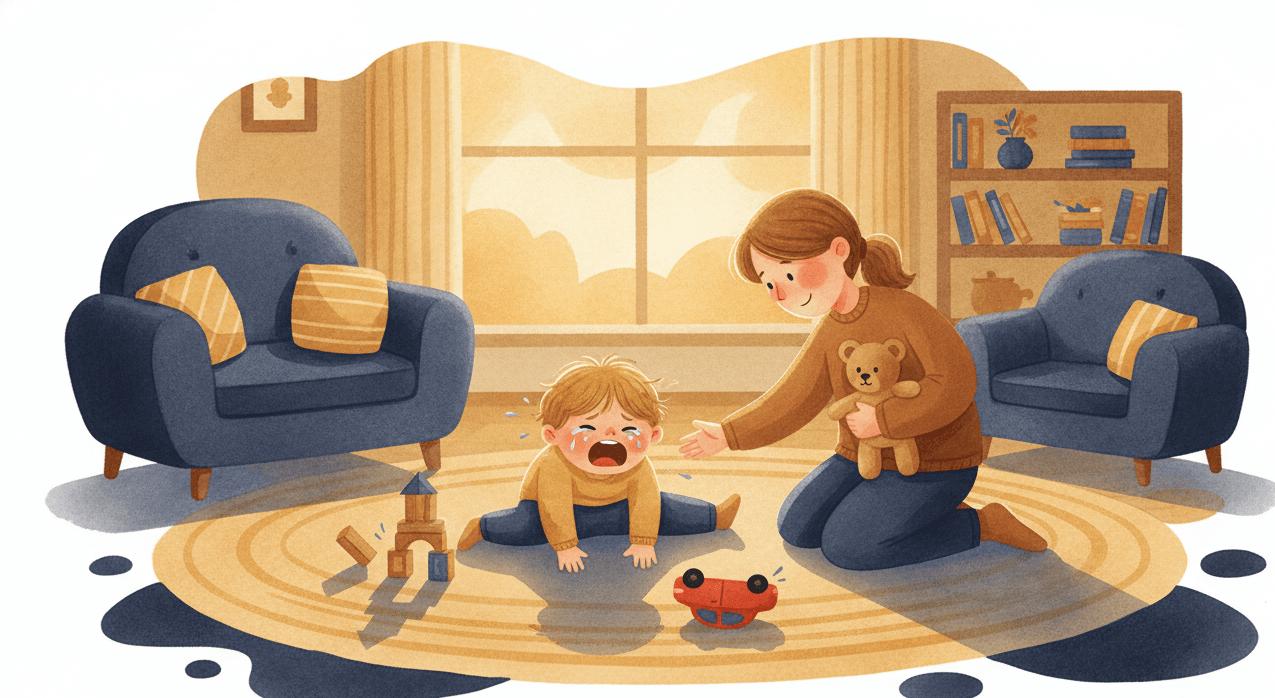
The familiar wail starts low, then escalates into a full-blown scream. Your sweet, curious four-year-old, just moments ago laughing, is now a crumpled heap on the floor, consumed by a tantrum. It’s a scene many parents know intimately, leaving us feeling helpless, frustrated, and utterly drained.
But what if we could understand these emotional explosions better? What if we had a roadmap to navigate them, not just to survive, but to truly help our children through these intense moments?
Feeling overwhelmed by your child's tantrums is completely normal – you're not alone in this.
Why This Happens: Understanding Your Child
At four years old, children are in a fascinating developmental stage. Their brains are rapidly expanding, but the part responsible for impulse control and emotional regulation – the prefrontal cortex – is still very much under construction.
They have big feelings, powerful desires, and a growing sense of independence, yet lack the words, experience, and neurological capacity to manage these emotions gracefully. This internal conflict often erupts as a tantrum.
Think of it as their emotional cup overflowing. They might be tired, hungry, overstimulated, or simply struggling to communicate a complex need. These triggers, combined with immature coping skills, create the perfect storm.
What Your Child Is Feeling
While it looks like defiance, your child isn't intentionally trying to make your life difficult. In the throes of a tantrum, they are genuinely distressed and feel a profound loss of control.
Their world might feel like it's falling apart because a toy broke, or they can't have *that* specific cookie. To them, these small things are monumental. They are overwhelmed by their own intense emotions, which can be terrifying.
They need your calm presence, even when their behavior is anything but calm. They need to feel safe to express these big feelings, knowing you're there to help them through it, not punish them for having them.
Tantrums aren't about manipulation; they're about communication when words fail.
What You Can Do: Practical Steps
Navigating tantrums requires a blend of patience, empathy, and consistent strategies. Here are some actionable steps you can take to help your four-year-old (and yourself) through these challenging moments.
Stay Calm and Present
Your child mirrors your energy. Taking a deep breath and remaining calm, even if you feel frustrated, helps de-escalate the situation. Your calm is their anchor in the storm.
Acknowledge and Validate Feelings
Instead of dismissing their feelings, validate them. Say, 'I see you're really angry about not having another cookie. It's okay to feel angry.' This helps them feel understood and starts teaching emotional literacy.
Offer Limited Choices
Often, tantrums stem from a desire for control. Give them choices that you can live with. 'Do you want to wear the blue shirt or the red shirt?' or 'Do you want to put your shoes on first or your coat?'
Identify Triggers and Prevent
Pay attention to patterns. Is your child more prone to tantrums when tired, hungry, or overstimulated? Proactive steps like consistent naps, snacks, and quiet time can significantly reduce outbursts.
Teach Coping Strategies (After the Storm)
When calm, teach simple coping tools. Practice deep breaths, hugging a stuffed animal, or finding a quiet space. Role-play these strategies so they have tools ready for next time.
Connect Before You Correct
Prioritize connection over immediate correction during a tantrum. Once the emotional intensity has subsided, you can gently discuss the behavior and expectations. Focus on rebuilding trust and understanding first.
How Bedtime Stories Can Help
Bedtime stories are more than just entertainment; they are powerful tools for emotional development. They offer a safe, imaginative space for children to explore complex feelings and situations without direct confrontation.
By listening to stories where characters face similar challenges – like feeling frustrated or overwhelmed – your child can process their own experiences. They learn empathy, problem-solving, and healthy coping mechanisms through relatable narratives.
FableJar stories, in particular, can be tailored to address specific issues like managing big emotions. When your child is the hero, navigating a tantrum-like situation in their own magical world, they gain a sense of agency and understanding.
Leo and the Grumpy Cloud Day
Leo loved building towers, especially with his shiny green blocks. But today, the tallest tower he’d ever made wobbled, then tumbled down with a clatter. A grumpy cloud seemed to settle over Leo’s head. His face crumpled, and a loud 'NO!' escaped him, even though no one had asked him anything.
The grumpy cloud grew bigger, thrumming with Leo’s frustration. 'It’s okay to feel grumpy, Leo,' whispered his wise old toy elephant, Elara. 'Sometimes, big feelings feel like a storm inside. What if we found a way to let some of that storm out, safely?' Elara suggested taking three deep 'whoosh' breaths, like a dragon letting out smoke.
Leo tried it, a shaky whoosh, then another. The cloud didn't vanish, but it felt a tiny bit lighter. Elara then suggested they rebuild the tower, but this time, they’d imagine each block was a happy thought, stacking them carefully, one by one. Slowly, the grumpy cloud began to drift away, replaced by the sunshine of rebuilding.
Create Your Child's Story FreeMoving Forward
Dealing with four-year-old tantrums is undoubtedly one of parenting's toughest tests. Remember, you're not failing; you're guiding a small human through enormous emotional growth. Every tantrum is an opportunity to teach, connect, and reinforce your unwavering love.
Be patient with yourself and your child. Celebrate the small victories, learn from the challenges, and know that with consistent empathy and practical tools, you are building a resilient, emotionally intelligent little person. You've got this.
Help Your Child Through Stories
Every night, FableJar creates a personalised bedtime story where your child is the hero — helping them work through the exact challenge you're facing.
Create a Free StoryNo credit card required. First story is free.
Get weekly story ideas for your child
One email a week. Real parenting challenges. Story-based solutions. No spam.
Join 5,000+ parents. Unsubscribe anytime.
Keep reading
A Simple Way to Build Confidence in Kids Every Night
Confidence isn't built in big moments. It's built in small ones — like hearing yourself succeed in a story.
What to Do When Your Child Is Afraid of the Dark
Telling them 'there's nothing there' doesn't work. Here's what does — and how a story can reframe the dark.
How to Talk to Kids About Bullying (That Actually Works)
Most anti-bullying talks go over kids' heads. Stories that model real responses give them tools they can use.