Why Stories Work Better Than Advice for Children
When you tell a child what to do, they resist. When a story shows them, they absorb it. Here’s why — and how to use it.
“The best parenting advice doesn’t sound like advice at all. It sounds like ‘once upon a time.’”
By the Fable Jar Team ·

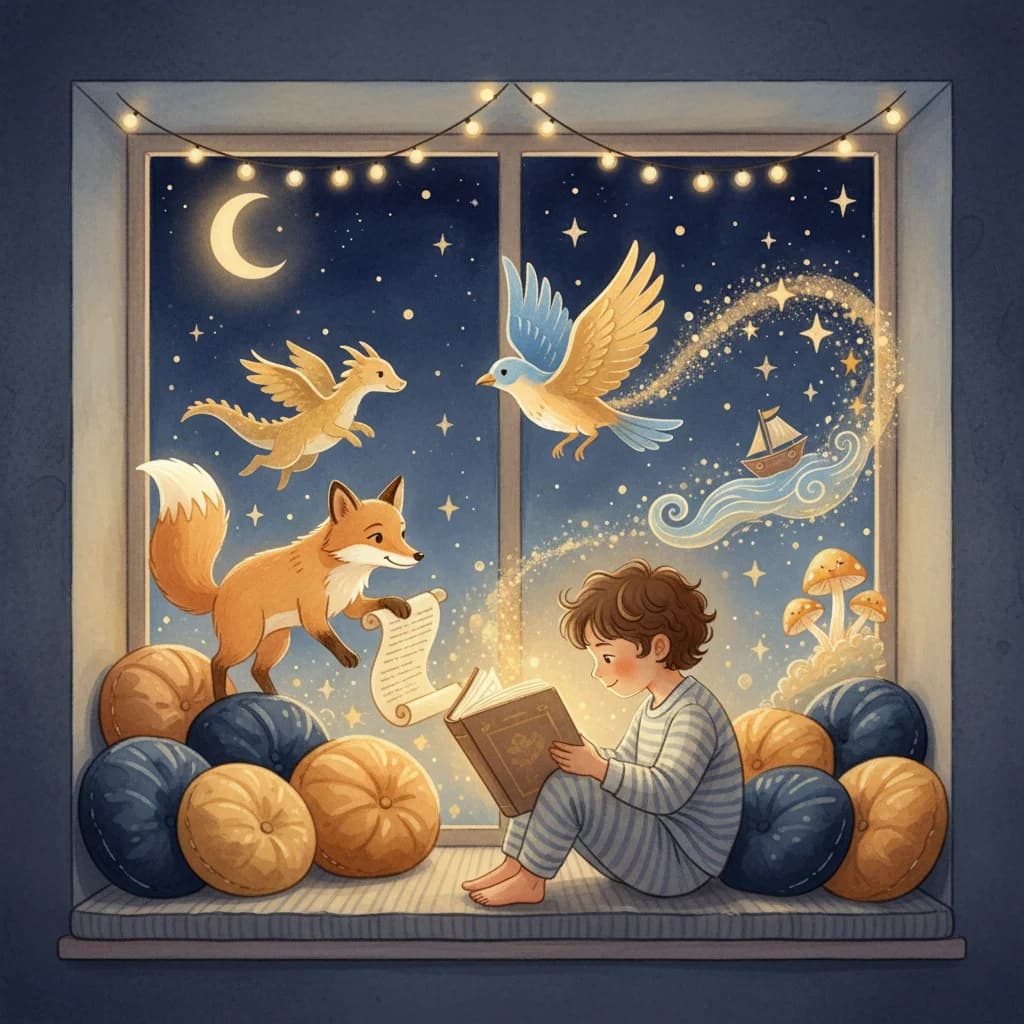
You’ve had the conversation a hundred times. Your child did something they shouldn’t have — lied about brushing their teeth, pushed their sibling, refused to share. You sit them down. You explain, calmly and clearly, why what they did wasn’t okay. You give them the right words. You ask them to repeat it back. They do. They nod. They understand.
And then, within the hour, they do the exact same thing again.
It’s not that your child is defiant. It’s not that they don’t care. It’s that advice — even good, clear, loving advice — enters a child’s brain through the wrong door. It arrives as an instruction, and instructions trigger something psychologists have studied for decades: resistance.
The moment a child senses they’re being told what to think, a wall goes up. Stories walk around that wall entirely.
The invisible wall: psychological reactance
In 1966, psychologist Jack Brehm described a phenomenon called psychological reactance: when people feel their freedom to choose is being threatened, they instinctively push back — even if the suggestion is something they’d otherwise agree with. It’s not stubbornness. It’s a hardwired survival mechanism. The brain protects its autonomy.
Adults experience this too (think of how you feel when someone tells you to calm down). But in children, reactance is even stronger, because they have so little autonomy to begin with. Their entire day is structured by other people’s decisions — when to eat, when to sleep, what to wear, where to go. So when a parent adds one more instruction to the pile — “You need to share” — the child’s brain doesn’t hear helpful advice. It hears another rule. Another demand. Another moment where someone else is deciding how they should feel.
The result? They nod. They say sorry. And they resist the lesson internally, because it was imposed rather than discovered.
How stories bypass the wall
Stories work differently. When a child listens to a story, they don’t feel lectured. They feel invited. There’s no instruction, no finger-wagging, no implied criticism. There’s just a character, a situation, and a choice. The child watches the character navigate a dilemma — and draws their own conclusion.
This is the crucial difference. Advice tells a child what to think. A story lets them think it themselves. And when a child arrives at a moral conclusion on their own — even if the story gently guided them there — they own it in a way they never own an instruction.
Psychologists call this “self-generated insight,” and it’s one of the most robust findings in the science of learning. Information we discover for ourselves sticks. Information we’re handed doesn’t. A child who watches a story character learn that lying makes things worse understands why honesty matters. A child who’s told “don’t lie” just knows the rule.
A child who discovers a moral truth through a story owns it. A child who’s told the same truth resists it. Same lesson. Different door.
The difference between telling and letting them see
Consider two scenarios. In the first, your child has been unkind to a friend. You say: “That wasn’t nice. You need to apologize. Think about how they feel.”
In the second, you read them a story that night about a character who says something careless to a friend. The friend’s face falls. The character notices. They feel the weight of what they’ve done — not because someone told them to feel it, but because the story made them feel it. They go back. They say sorry. It’s hard. But the friendship, mended, becomes stronger than before.
In both scenarios, the message is the same: be kind, apologize, consider others’ feelings. But the first lands as a correction. The second lands as a feeling. And feelings, unlike instructions, change behavior.
Advice vs. story: how children process each
Direct Advice
Triggers reactance. Enters as an instruction. Stored in short-term memory. Competes with the child’s need for autonomy. Often resisted, even when understood.
Story-Based Learning
Bypasses reactance. Enters as an experience. Stored in emotional memory. Feels self-discovered. Carried forward as identity, not obligation.
Personalized Story
All the power of narrative learning, plus the brain’s self-referential network. The child doesn’t just watch a character learn — they experience learning it themselves.
Why personalized stories make this even more powerful
If stories are more effective than advice, personalized stories are the most effective of all. When the character in the story shares your child’s name, lives in their world, and faces their specific challenge, the brain stops treating the story as fiction. It processes it as autobiography.
The lesson doesn’t land as something a character learned. It lands as something your child learned. The apology the character makes? Your child made it. The courage the character showed? Your child showed it. The story becomes a memory they carry forward as evidence of who they are.
Aiden and the Sorry Stone
Aiden didn’t mean to say it. The words just tumbled out — sharp and quick, like throwing a stone. And when he saw his friend’s face change, he wanted to catch the stone mid-air and swallow it back. But you can’t unthrow a stone.
That night, Aiden found a small, smooth pebble on his windowsill. It was warm, and it glowed faintly, like an ember. Written on it in tiny letters was a single word: Sorry.
“Saying sorry is like picking up a stone you threw,” whispered the Ember Fox, curled up on the moonlit sill. “It doesn’t undo the throw. But it shows you care where it landed.”
The next morning, Aiden walked up to his friend. The words were hard. His face felt hot. But he held the Sorry Stone in his pocket, took a deep breath, and said what he needed to say. And his friend smiled — not because the hurt was gone, but because Aiden had cared enough to try.
Create a story like this for your child →Replace the lecture with a story
Tell us your child’s name and the lesson they need right now. Fable Jar creates a story where they discover it on their own.
Create a Story for Your ChildTakes less than 60 seconds. First story is free.
Think about the last time you told your child what to do and watched it bounce off them. Now imagine tonight, instead of a correction, you give them a story. A story where they face the same situation and find their way through it — not because someone told them to, but because something inside them already knew how. That’s not a lesson. That’s a transformation.
Stories that landed where advice couldn’t
“I’d been telling my daughter to stop taking her sister’s things for months. Nothing changed. Then she heard a story about a character who learned to ask first. Two days later, she asked her sister before borrowing a crayon. I almost fell off my chair.”
“My son doesn’t respond to lectures. Never has. But he talks about his Fable Jar stories constantly. Last week he told his younger brother, “You have to be like the Ember Fox — brave enough to say sorry.” That’s when I knew.”
Get story-based parenting tips every week
One email a week. Real challenges. Story solutions. No spam.
Join 5,000+ parents. Unsubscribe anytime.
Keep reading
How Stories Shape a Child’s Thinking
Children don’t learn values from lectures. They absorb them from characters they love.
A Simple Way to Build Confidence in Kids Every Night
Confidence is built in small, repeated moments — like hearing yourself succeed in a story.
How to Help Your Child Make Friends (Without Forcing Them)
A gentler approach — and how a single bedtime story can open doors words alone can’t.