The Science Behind Why Personalized Stories Build Real Confidence
When a child hears their own name in a story, something measurable changes in their brain. The hero’s courage doesn’t stay in the book. It becomes theirs.
“What if the most powerful word in a bedtime story isn’t ‘once upon a time’ — it’s your child’s name?”
By the Fable Jar Team ·

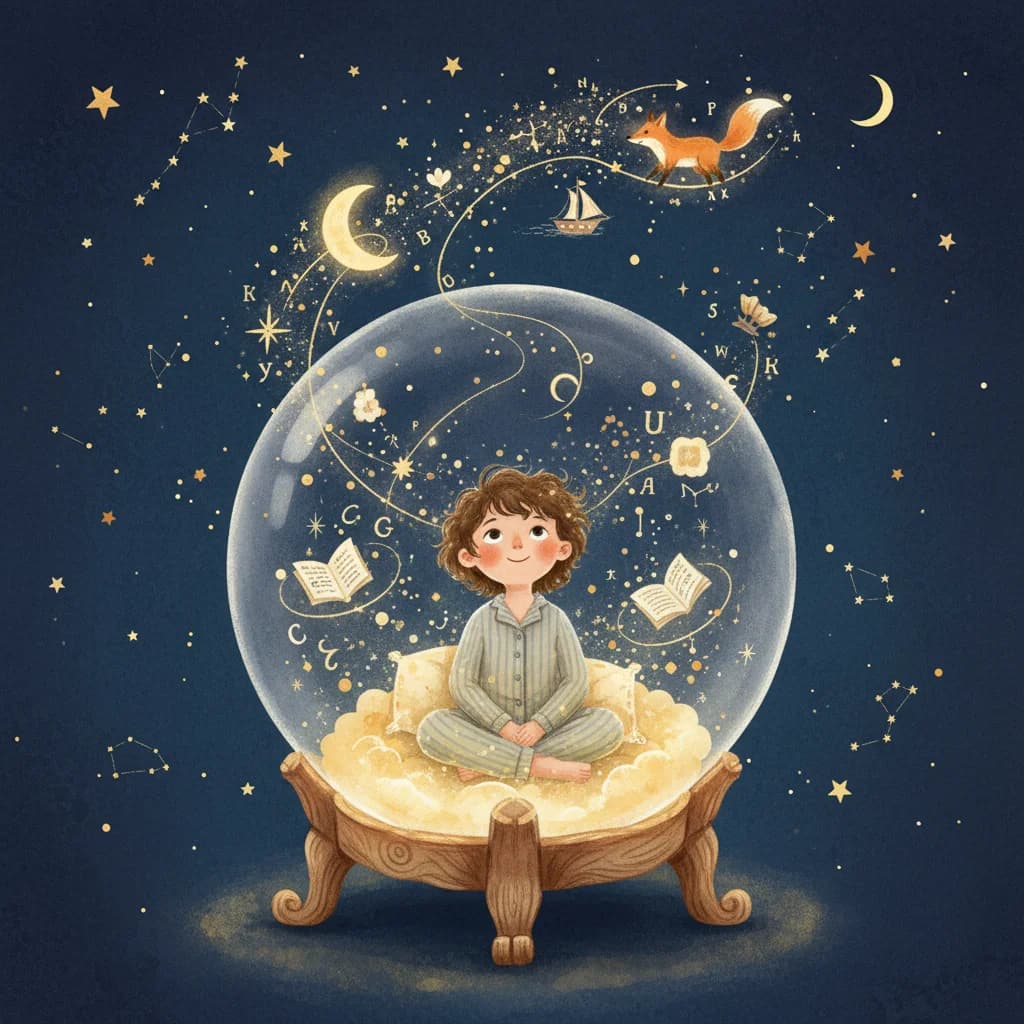
You’re reading a story to your child. It’s a good one — a brave hero, a scary challenge, a warm ending. Your child enjoys it. They snuggle closer. But then you do something different: you swap the hero’s name for your child’s name. And the change is instant. Their eyes widen. They sit up straighter. They whisper, almost involuntarily: “That’s me.”
Something shifted in that moment, and it wasn’t just engagement. It was identity. Your child stopped being a listener and became a participant. The hero’s bravery was no longer something they admired from the outside. It was something they felt from the inside.
This isn’t wishful thinking. There’s a growing body of neuroscience and psychology research that explains exactly why personalized stories have this effect — and why they build the kind of confidence that actually transfers to real life. The science is clear: when a child is the hero of a story, their brain doesn’t treat it as fiction. It treats it as experience.
The brain doesn’t have a clear boundary between “things I did” and “things I vividly imagined myself doing.” Personalized stories exploit that beautifully.
The self-reference effect: why your name changes everything
In 1977, psychologists Rogers, Kuiper, and Kirker discovered something remarkable: information that is processed in relation to the self is remembered significantly better than information processed in any other way. They called this the self-reference effect, and decades of subsequent research have confirmed it as one of the most robust findings in memory science.
When you hear your own name, your brain’s medial prefrontal cortex (mPFC) activates. This is the region responsible for self-referential processing — the ongoing mental construction of who you are. Hearing your name in a story doesn’t just get your attention. It tells the brain: this is about you. File this under identity.
For children, whose sense of self is still being constructed, this effect is especially powerful. Every story they hear about themselves becomes a brick in the foundation of their identity. A story where they are brave builds the belief “I am brave.” A story where they are kind builds the belief “I am kind.” Not because someone told them so. Because they experienced it.
Neural coupling: when the listener’s brain mirrors the story
In 2010, Princeton neuroscientist Uri Hasson published a landmark study on what he called neural coupling. Using fMRI, his team showed that when a person listens to a compelling story, their brain activity begins to mirror the brain activity of the storyteller. The listener’s brain doesn’t just receive information — it simulates the experience being described.
When a story describes a character climbing a mountain, the listener’s motor cortex activates. When the character feels afraid, the listener’s amygdala fires. When the character triumphs, the listener’s reward centres light up. The brain, in a very real neurological sense, is living the story.
Now combine this with the self-reference effect. When the character who climbs the mountain has your child’s name, the brain isn’t just simulating a character’s experience. It’s simulating the child’s own experience. The motor cortex, the amygdala, the reward centres — they’re all firing, and the mPFC is tagging everything with the label: “this happened to me.”
When the hero shares your child’s name, the brain stops simulating someone else’s experience and starts recording the child’s own.
What the research says about personalized stories for children
A growing number of studies have specifically examined the effects of personalized narratives on children. Research published in the Journal of Applied Developmental Psychology found that children who read stories featuring their own name and personal details showed significantly higher comprehension, recall, and engagement compared to children who read identical stories with generic character names.
More importantly, a 2019 study at the University of Sussex found that personalized stories had a measurable impact on children’s self-concept — the set of beliefs a child holds about who they are. Children who were read personalized stories featuring themes of courage and persistence rated themselves as braver and more capable on self-assessment questionnaires than a control group who heard the same stories with different names.
This is the key finding: personalized stories don’t just entertain more. They don’t just teach more. They change what children believe about themselves. And what a child believes about themselves is the single most powerful predictor of what they’ll attempt, how they’ll respond to setbacks, and who they’ll become.
The science at a glance
Self-Reference Effect
Information processed in relation to the self is remembered more deeply and durably. Your child’s name in a story tells the brain: “this matters. This is who I am.”
Neural Coupling
The listener’s brain mirrors the story’s events. When the hero feels brave, the child’s brain rehearses bravery. Personalization makes this mirror sharper and more personal.
Self-Concept Shift
Personalized stories measurably change what children believe about themselves. A child who hears themselves being brave begins to believe they <em>are</em> brave.
Generic stories help. Personalized stories transform.
Let’s be clear: all stories are good for children. Reading any picture book, telling any bedtime tale, making up any adventure together — these are wonderful, valuable things that build language, empathy, and connection. Generic stories give children models. They show what bravery, kindness, and resilience look like in someone else.
But personalized stories do something generic stories can’t: they close the gap between “that character was brave” and “I was brave.” They move the lesson from admiration to identity. The child doesn’t just learn about courage — they accumulate evidence that they are courageous. Night after night, story after story, the evidence builds. And eventually, it reaches a tipping point where the child no longer needs the story to tell them they’re brave. They just know.
Zara and the Mountain That Listened
The mountain was the tallest thing Zara had ever seen. It rose from the meadow like a sleeping giant, its peak hidden in clouds. Every child in the valley had tried to climb it. None had reached the top.
“You’ll never make it,” said the wind, tugging at her hair. “Turn back,” groaned the rocks beneath her feet. But Zara noticed something the others hadn’t: the mountain was listening. With every step she took, the ground softened slightly, as if making room for her.
Halfway up, her legs ached and her breath came in short bursts. She sat on a ledge and looked down. The valley was so far below it looked like a painting. “I can’t,” she whispered. And the mountain, very softly, whispered back: “You already have. Look how far you’ve come.”
Zara looked. She saw the meadow where she’d started, small as a postage stamp. She saw the winding path, each switchback a choice she’d made to keep going. And she realized the mountain wasn’t testing her. It was showing her what she was made of. She stood up, took one more step, and the clouds parted to let her through.
Create a story like this for your child →Build your child’s confidence with science, not lectures
Enter their name, age, and the confidence challenge they’re facing. Fable Jar creates a personalized story backed by the neuroscience of self-reference and narrative transportation.
Create a Story for Your ChildTakes less than 60 seconds. First story is free.
Every night, your child’s brain is building its understanding of who they are. Every experience — real and imagined — becomes a data point. What if, tonight, you gave their brain a data point that says: you are brave, you are capable, you have already climbed mountains? Not as a pep talk they’ll forget by morning. As a story they’ll carry in their bones. That’s what personalized stories do. That’s what the science says. And that’s what your child deserves to hear before they fall asleep.
What parents are seeing
“I didn’t believe a story could make a difference. But after two weeks of personalized Fable Jar stories, my daughter started saying “I can do hard things.” She didn’t get that from me. She got it from a story where she climbed a mountain. And now she believes it’s true.”
“My son is on the spectrum and struggles with new situations. His Fable Jar stories give him a script — a memory of having already handled something similar. His therapist says it’s one of the best tools we’ve found. And it’s a bedtime story.”
Get the science of confident kids, delivered weekly
One email a week. Research-backed parenting insights. Story-based confidence strategies. No spam.
Join 5,000+ parents. Unsubscribe anytime.
Keep reading
A Simple Way to Build Confidence in Kids Every Night
Confidence is built in small, repeated moments — like hearing yourself succeed in a story, night after night.
Why Kids Relate Better to Stories Than Advice
It’s not that kids don’t listen — it’s that their brains process narrative differently than instruction.
A Bedtime Story That Helps Kids Deal With Anxiety
What if tonight’s story could actually lower your child’s anxiety? The science of narrative therapy at bedtime.